Semuliki National Park is one of Uganda’s most fascinating and ecologically rich protected areas, renowned for its unique lowland tropical rainforest, rare wildlife, and strong cultural heritage. It was Gazetted in 1993 and covering approximately 220 square kilometers, the park lies in the remote western corner of Uganda within the Albertine Rift Valley. It borders the Democratic Republic of Congo and forms part of the vast Ituri Forest ecosystem, making it the only true lowland rainforest in East Africa. This gives Semuliki a biodiversity profile more closely related to Central Africa than to the rest of Uganda.
Semuliki’s landscape is dominated by the lush Semuliki Forest, one of Africa’s oldest and most biologically diverse rainforests. It is a refuge for species that survived the last Ice Age and remains a hotspot for conservation and scientific research. The forest is characterized by tall, ancient trees, dense undergrowth, winding rivers, and a warm, humid climate—offering a distinctly different experience from Uganda’s more commonly visited montane forests.
The park is famous for its extraordinary birdlife, boasting over 440 bird species, including 46 found nowhere else in East Africa. It is a paradise for birding enthusiasts, with species such as the Congo serpent eagle, Nkulengu rail, piping hornbill, and yellow-throated cuckoo providing rare sightings for avid birders. Semuliki is often regarded as one of the premier birding destinations in sub-Saharan Africa.
Wildlife in Semuliki is equally captivating, though often shy due to the thick rainforest cover. The park is home to chimpanzees, De Brazza’s monkeys, red-tailed monkeys, black-and-white colobus, forest elephants, buffaloes, pygmy antelopes, civets, and numerous nocturnal species. The forest floor teems with butterflies, and the rivers harbor hippos and crocodiles. With over 52 mammal species, many of which are Central African in origin, Semuliki offers a unique and rewarding safari for nature lovers.
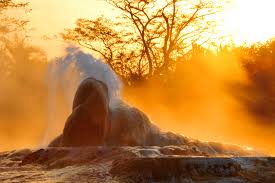
One of the park’s most iconic attractions is the Sempaya Hot Springs, a pair of male and female geothermal springs that bubble with boiling water and steam. The “female” spring, known as Nyasimbi, shoots water up to two meters high and is surrounded by mineral-rich pools and steamy clouds, creating an otherworldly landscape. Visitors often enjoy the experience of boiling eggs in the hot waters—an unforgettable demonstration of the geothermal power beneath the earth’s surface.
Cultural encounters are also a key highlight of Semuliki. The park is home to the Batwa (Twa) hunter-gatherers, an indigenous community whose traditions are deeply tied to the forest. Cultural visits offer insight into their ancient lifestyle, music, dances, and knowledge of forest herbs, adding a rich human dimension to the natural beauty of the region.
Remote, unspoiled, and deeply atmospheric, Semuliki National Park offers travelers an off-the-beaten-path adventure into one of Africa’s most authentic rainforests. Its unique blend of Central African wildlife, exceptional birdlife, geothermal wonders, and cultural richness makes Semuliki a destination unlike any other in Uganda—a true hidden gem for explorers seeking raw, immersive nature.
Introduction to Kyambura Gorge
Kyambura Gorge—often called the “Valley of Apes”—is one of Uganda’s most extraordinary and visually striking natural wonders, renowned for its dramatic scenery, rich biodiversity, and unique population of habituated chimpanzees. Located on the eastern boundary ofQueen Elizabeth National Park, this deep, forested gorge forms a hidden oasis of life carved into the savannah plains of the Rift Valley. Its mysterious atmosphere, lush vegetation, and rare wildlife encounters make it one of the most intriguing eco-systems in East Africa.
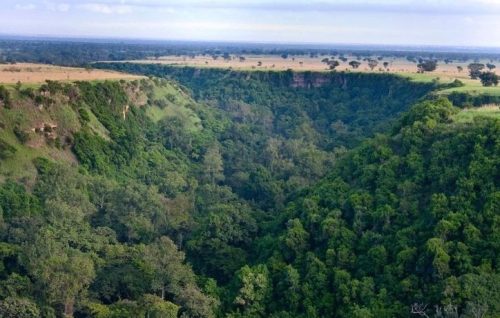
Stretching about 11 kilometers long and over 100 meters deep, Kyambura Gorge is a steep, rainforest-filled chasm formed by centuries of erosion from the Kyambura River. From above, the gorge appears as a striking green scar slicing through open grasslands; but once inside, visitors are enveloped in a cool, vibrant world of tangled vines, towering trees, and echoing bird calls. The contrast between the dry savannah above and the lush rainforest below makes Kyambura one of Uganda’s most scenic landscapes.
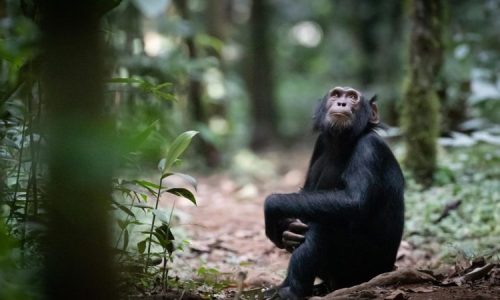
The gorge is famous for its community of chimpanzees, one of the few groups in Uganda that are fully habituated to human presence. Though small and isolated, this population has become an important symbol of primate conservation and ecological resilience. Guided chimpanzee tracking experiences take visitors deep into the forest, where they may witness chimps feeding, grooming, playing, or calling across the gorge. The intimate nature of these treks offers a profound connection with one of humanity’s closest relatives.
Beyond chimpanzees, Kyambura Gorge hosts an impressive array of wildlife. The dense forest shelters black-and-white colobus monkeys, red-tailed monkeys, vervet monkeys, baboons, and several small mammals. The river attracts hippos, while the surrounding vegetation supports giant forest hogs, antelopes, and other savannah species that occasionally descend into the gorge. Birdlife is outstanding, with species such as the African finfoot, blue-headed bee-eater, kingfishers, and numerous forest dwellers enriching the area’s avian diversity.
Kyambura Gorge is not only a wildlife haven but also a site of ecological importance. It serves as a natural biodiversity corridor and a critical refuge for species isolated by habitat loss in the surrounding landscape. Conservation efforts—supported by Uganda Wildlife Authority and community-based programs—focus on restoring habitat, promoting sustainable tourism, and protecting the gorge’s fragile ecosystems.
Mysterious, breathtaking, and biologically rich, Kyambura Gorge offers one of Uganda’s most immersive and unforgettable nature experiences. Its blend of scenic beauty, primate tracking, and conservation significance makes it a standout destination within Queen Elizabeth National Park and an essential stop for travelers seeking a deeper connection with the wild.
Introduction to Pian Upe National Park
Pian Upe National Park, also known as Pian Upe Wildlife Reserve, is one of Uganda’s most remote and underexplored conservation areas, offering a raw and authentic African wilderness experience. Located in the northeastern region of Uganda, within Karamoja Sub-region, the reserve stretches over 2,500 square kilometers, making it Uganda’s second-largest protected area. Its vast, open landscapes, semi-arid savannahs, and scattered acacia woodlands create a dramatic and distinctive ecosystem unlike any other in the country.
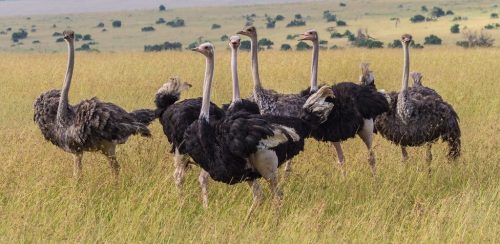
The park is renowned for its diverse wildlife, particularly species adapted to arid and semi-arid environments. Pian Upe supports populations of zebras, giraffes, elephants, buffaloes, oryx, hartebeests, elands, and waterbucks, alongside predators such as lions, leopards, and hyenas. The reserve also serves as a haven for rare and endangered species, including the roan antelope, African wild dog, and various migratory birds that use the park as a seasonal refuge. With more than 450 bird species recorded, Pian Upe is a premier destination for birdwatchers seeking both savannah and wetland species.
One of the park’s defining features is its network of seasonal rivers and swamps, including the Pian Upe Swamp and smaller floodplains, which sustain wildlife during dry periods and create vital ecosystems for aquatic birds and mammals. These wetland areas contrast beautifully with the park’s dry grasslands and rocky outcrops, providing a rich mosaic of habitats that encourage biodiversity.
Pian Upe National Park is also culturally significant. It lies within the traditional grazing lands of the Karimojong people, who have coexisted with wildlife for centuries. This interplay between local communities and wildlife adds a unique human dimension to the park’s natural heritage, reflecting centuries of adaptation and coexistence in a challenging environment.
Due to its remote location and minimal tourism infrastructure, Pian Upe remains largely off the beaten path, making it ideal for travelers seeking solitude, adventure, and authentic encounters with wildlife in a pristine African savannah setting. Safari activities include game drives, bird watching, and guided nature walks, offering opportunities to observe wildlife in natural and undisturbed habitats.
With its sweeping landscapes, remarkable biodiversity, and sense of untouched wilderness, Pian Upe National Park stands as a hidden gem of Uganda. It provides a rare glimpse into the country’s vast, untamed northeastern ecosystems—a destination for explorers, conservation enthusiasts, and wildlife photographers seeking an extraordinary and adventurous safari experience.
Introduction to Toro Semuliki National Park
Toro Semuliki National Park, also known as Toro Semuliki Wildlife Reserve, is one of Uganda’s most ecologically significant and biologically rich protected areas. Located in the Bundibugyo District in the western part of the country, along the western rift valley near the border with the Democratic Republic of Congo, the park encompasses approximately 447 square kilometers of dense lowland tropical rainforest, savannah patches, wetlands, and riverine forests. It represents a unique blend of Central African and East African ecosystems, making it a vital refuge for rare and endangered species.
The park is renowned for its high biodiversity, particularly its primate populations. It is home to chimpanzees, red-tailed monkeys, black-and-white colobus monkeys, and other small primates that inhabit its dense forests. Toro Semuliki’s primate diversity reflects the park’s position as a transitional zone between the Central African rainforests and the East African savannah, offering a unique ecological experience for wildlife enthusiasts and researchers alike.
In addition to primates, the park shelters a remarkable variety of wildlife adapted to both forested and savannah habitats. Elephants, bushbucks, duikers, giant forest hogs, and buffaloes roam the park, while elusive predators such as leopards and hyenas inhabit the dense vegetation. The park is also a birdwatcher’s paradise, with over 400 bird species recorded, including rare Central African species such as the Congo serpent eagle, African finfoot, and several colorful forest-dwelling birds.
Toro Semuliki’s landscapes are characterized by lush, evergreen forests interspersed with swamps and wetlands, which support a vibrant array of flora and fauna. The park’s rivers and streams feed into the larger Semuliki ecosystem, contributing to the hydrological and ecological health of the region. Its remoteness and relative inaccessibility help preserve its pristine condition, making it one of Uganda’s least disturbed yet most rewarding wildlife destinations.
Beyond its natural significance, Toro Semuliki is culturally and historically important. It lies within the traditional lands of the Toro and Bakonjo communities, who have lived alongside the forest for generations. Their knowledge of medicinal plants, forest resources, and wildlife behavior complements conservation efforts, fostering a sense of community stewardship over the park’s resources.
Toro Semuliki National Park offers visitors an off-the-beaten-path adventure into one of Uganda’s most pristine ecosystems. Its combination of dense rainforest, rare wildlife, exceptional primate populations, and rich birdlife makes it a destination for eco-tourists, researchers, and travelers seeking authentic and immersive experiences in a remote, untouched natural environment.
Uganda’s wild rhinos became extinct in the early 1980s after human encroachment, poaching and conflict wiped them out. However, 20 years later, in 2005, six rhinos were reintroduced to Uganda at Ziwa Rhino sanctuary Uganda, a 70-sq-km private non-profit sanctuary set up with the long term goal of getting the rhino back into the Murchison Falls National Park.
There are now 41 southern white rhinos, including nine baby rhinos, the first in almost 30 years. Located half-way between Kampala and Murchison Falls National Park, Ziwa is a worthwhile overnight stay if you wish to see all the Big Five, but also works as a stop-off en route to Murchison.
What to Expect at Ziwa Rhino sanctuary Uganda
Ziwa Rhino sanctuary allows you to experience the majesty of these creatures up-close with a rhino trek, where an experienced ranger will lead you on foot to see them at a safe distance (6-7 meters away).
Ziwa is also home to almost 40 other mammal species, including crocodiles, hippos, leopards, oribis, bushbuck, and approximately 300 species of bird, which can be observed with a game drive, canoe trip or night walk.
Things to Do At Ziwa Rhino sanctuary Uganda
Rhino Tracking At Ziwa Rhino sanctuary Uganda
Free to roam across the savannah, acacia woodlands and cool muddy swamps, Uganda’s only rhinos at Ziwa Rhino sanctuary Uganda spend their day grazing on the thick shrubbery or resting under the shade of tall trees.
An experienced and knowledgable ranger will guide you to them, and educate you on their habits and behaviours in their natural habitat.
You will be positioned a safe six to seven meters away, and there will be plenty of photo opportunities.
Depending on their location in the park, you may need to drive to where they are, and then trek the remaining distance on foot.
Although you can choose to do a rhino trek at any time of the day, the best time to go is between 8 am and 10 am and 4 pm and 6 pm. Make sure you wear comfortable closed shoes, long trousers, and bring plenty of water.
Shoebill Stork and Canoe ride at Ziwa Rhino Sanctuary, Uganda
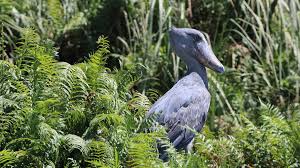
At first glance, shoebill stalks have a goofy charm due to their Dutch Clog-esque foot-long bill.
Despite first impressions, this stork is an unassuming predator known to feast on baby crocodiles, big fish like tilapia and Nile monitor lizards.
Head out on an early morning canoe ride in the adjacent swamp to see this prehistoric-looking bird and enjoy a beautiful sunrise over the Lugogo Swamp.
Ziwa is one of the few places in Uganda where you are almost guaranteed to see this endangered bird.
Bird watching At Ziwa
Alongside rhino trekking, Ziwa Rhino Reserve also offers a number of other walks At Ziwa Rhino sanctuary Uganda
For those keen on birdwatching, there are four different trails to choose from which take you across the savannah, woodlands or swamps, each a habitat to the various species of bird that live here.
The best time to go birding is in the early morning between 6 am and 8 am or the early evening between 4 pm and 6 pm
Mgahinga Gorilla National Park is Uganda’s smallest national park – just 34 km². The park is breathtakingly beautiful. Behind the dramatic volcanic skyline, in front Bwindi Impenetrable Forest and to the left of Mutanda and Bunyonyi – lakes so scenic you can’t believe more people don’t know about them – Mgahinga is at the frontier of Uganda’s wilderness experiences.
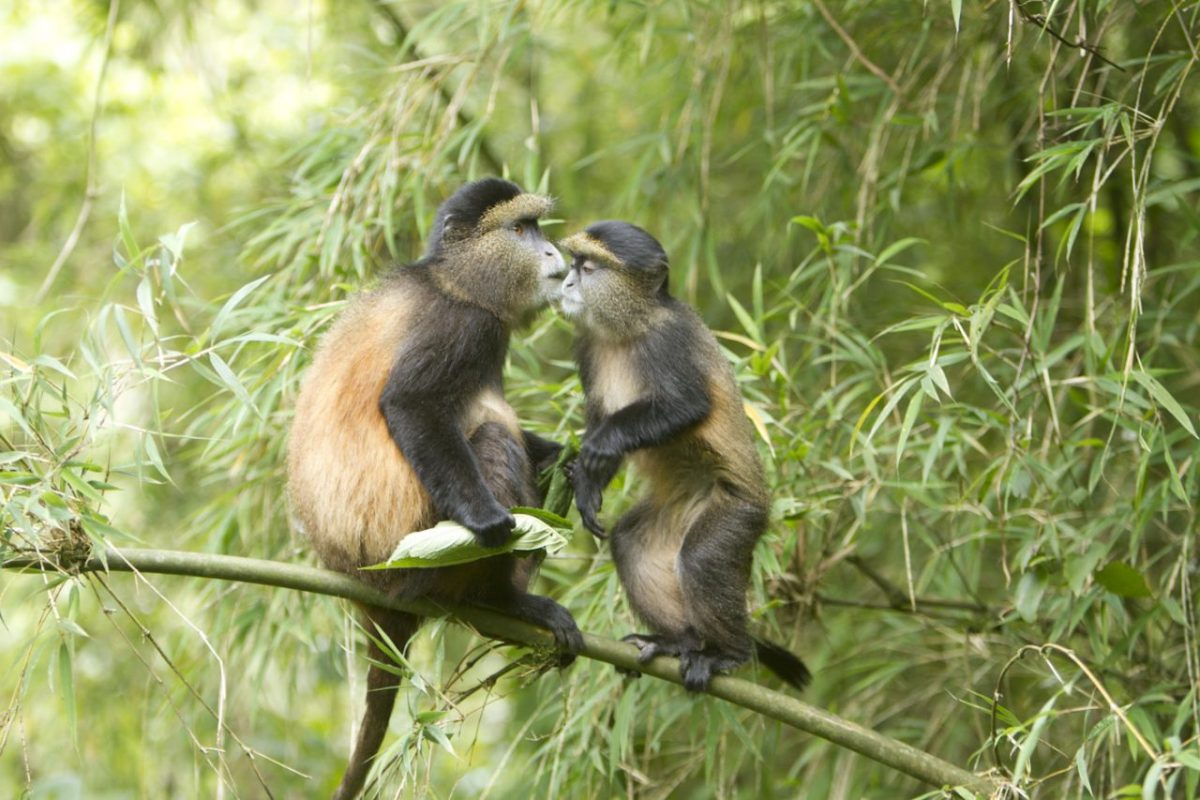
The montane-woodland, montane-forest and large swathe of bamboo forests supports a large population of golden monkeys, found only here in Uganda. They are also home to the Nyakagazi family of mountain gorillas, the only habituated group outside of Bwindi.
Traditionally, Mgahinga was used as an ‘over-flow’ gorilla tracking destination for Bwindi, but that has changed for two reasons. The first is that the increase in the cost of Rwandan gorilla permits to $1,500 per person has prompted visitors to explore Rwanda and then nip across the border to Mgahinga where the treks cost $800 per person (at time of writing).
The second reason is that Mgahinga Gorilla National Park is such a wonderful place to visit. Situated so closely to Mutanda and Bunyonyi lakes that you can spend a week in the far southwest and save the rest of Uganda for a second trip.
In addition to gorilla treks and golden monkey excursions – both a standard visit and the longer habituation experiences – Mgahinga is an excellent general trekking destination. Challenging guided day hikes are available to the summits of all three of the mountains accessible from Uganda: Gahinga, Sabyinyo and Muhabura.
Things to do in Mgahinga Gorilla National Park
Gorilla Trekking
The gorilla trekking in Mgahinga follows the same model as in Bwindi. Treks depart in the morning at about 9am. The length of the trek before you make contact with the gorillas depends on the location of the gorilla family. Contact lasts for one hour, during which you will be about 7 metres from the gorillas. When the hour has elapsed, you return through the forest to Park HQ, normally returning by early afternoon.
Although gorilla families constantly cross the border from Rwanda to Uganda, there is only one family habituated to make contact in Mgahinga. Called the Nyakagazi group, it has five silverbacks, two adult females and three young gorillas.
Between 2004 and 2012, after being attacked by a lone silverback, the family spent most of the time on the Rwanda side of the border. However, since 2012, they have been a regular presence on the Ugandan side. In the event they move again after permits have been bought, the Ugandan Wildlife Authority has committed to moving the treks to Bwindi or refunding the money.
Like in Bwindi, Mgahinga gorilla treks can be tough and challenging experiences. You need to be physically and mentally prepared and adequately dressed. Get that right, and you will enjoy one of the most memorable wildlife experiences in the world.
Golden Monkey Tracking and Habituation
Golden monkeys are large, inquisitive and mischievous old world monkeys found in the bamboo zone of the Virunga Volcanoes. They have a bright orange-gold body, cheeks and tail, with black limbs, crown and tail-end.
The monkeys range through the bamboo forest looking for food. Now used to human visitors, they continue their foraging and playful interactions without pause.
Found above 2,500 metres, the trek is challenging, but not normally as tough as gorilla tracking. Two versions are available: the standard trek with one hour contact and a habituation trek where you spend much longer on the mountain with the research team.
Queen Elizabeth National Park is Uganda’s most popular and visited wildlife conservation area. The park lies in the western part of Uganda in the districts of Kamwenge, Rukingiri, Rubirizi and Kasese. Queen Elizabeth National park currently occupies an area of about 764 square miles. The park borders Uganda’s Kibale National Park and is an extension of Congo’s Virunga National Park. The Kyambura gorge, Maramagambo forest, Kazinga Channel, sections of Lake George and Edward are all part of the park. When it was established in 1952, the park was then known as Kazinga National Park. The visit of the British Queen Elizabeth II in the early 1950’s impressed the government then so much the park was named in her honor.
Queen Elizabeth National park never experiences long droughts like in the Maasai Maraa or Serengeti as a result of its location within the rain shadow of the Rwenzori mountain ranges. As a result of that, it has green scenery for most of the year. Even if the park didn’t have any wildlife, visitors would still be amazed by the share the sheer natural beauty consisting of great forests, woodlands, plains, lakes, rivers, gorges and other volcanic features (craters and volcanic cones). 95 mammal species have been recorded in the park including the waterbuck, warthogs, topi, Uganda Kobs, spotted hyenas, sitatunga, Serval cats, mangoose, leopards, large forest pigs, L’Hoest’s monkeys, Jackal, hippopotamus, genial, elephants, crocodiles, civet, chimpanzee, Buffaloes, black and white colobus monkeys. Queen Elizabeth national park is a lion conservation unit and is home to over 200 lions including the intriguing tree climbing lions. Over 490 species of birds have been sighted in the park.
The main local tribes living near the parks boundaries are the Banyankore, Bakiga and Bakonjyo, The Bakiga and Bakonjo depend on subsistence agriculture while the Banyankore are known pastoralists. Salt mining is a popular economic activity especially among the Bakiga living near the park. The Uganda Wildlife Authority manages the park while also collaborating with several wildlife conservation organizations and teams of international and local researchers. Queen Elizabeth national park is close to Bwindi impenetrable forest, Kibale Forest National Park and Mgahinga National Park. This implies that visitors can combine a full wildlife safari and gorilla trekking in Bwindi Forest.
Accessing The Park
Travelers can reach the park by air or road. The distance from Kampala to the park through Mbarara is about 420 kilometers and takes about 8 hours of driving. From Lake Mburo National Park, the driving time is six hours while from Fort Portal town, it is four. The main roads are all well paved (made of tarmac) but those leading to and inside the park are made of hard soil.
One can use public of private vehicles to reach the park gate but no public commercial vehicles are allowed in the park. Public buses begin leaving the bus park in Kampala for Kasese very early in the morning throughout the week. The cost of a bus from Kampala to Kasese is about $4. Public buses in Uganda take long to get full and rarely arrive on time. The arrival time depends on whether the bus gets full on time or on overall traffic around along the road to the destination. Moreover most of the buses make frequent stops to drop and pick passengers in the small towns along the way.
As already noted, public buses do not go to the park. One needs to hire a taxi or motorcycle from the main highly to the Katunguru park gate or Mweya at another cost. The best way to travel to Queen Elizabeth National Park is to use the services of a tour operator. This is the safest, most comfortable and reliable means of getting to the park and ensuring the safari goes as planned. Tour operators tend to keep time and endeavor to make the journey as enjoyable as possible for the traveler. They also know the park in and out including the right people to contact in case of anything.
Visitors who wish to avoid the long driving time from Entebbe can hire a chartered flight from Kajjansi airstrip or Entebbe international airport to airstrips in Ishasha, Kasese or Mweya. One needs to hire a private car to take them to the park offices or their hotel from the airstrip. Tour Operators usually send a driver/guide to wait for the clients and transfer them from the airstrip to the park or lodge.
Attractions in Queen Elizabeth National Park
Queen Elizabeth national park is one of the places that justify the description of Uganda being “the pearl of Africa”. The scenery is stunning with beautiful forests, woodlands, Savanna, swamps, lakes, rivers, craters, gorges and landscape. International visitors to this park will never run short of activities. In fact, they might find themselves struggling to complete all of them. The key attractions are nature walks, games drives, boat cruises, chimpanzee trekking, the tree climbing lions and bird watching. If you want to see all the big 5 mammals in Uganda, then you might want to check out our Safaris
Game Drives: This is the most popular activity allowing you to see 95 percent of the mammals you would see in the Serengeti but with better scenery and landscape that includes forests, savanna grasslands, swamp lands, acacia woods, crater lakes, gorges and the nearby Rwenzori Mountains. The 3-4 hour games drives start in the early morning to any of the three sectors – the Kasenyi plains (near Kazinga Channel), Ishasha sector (tree climbing lions) or the Katwe crater fields. The crater lakes region has beautiful landscape with large craters and salt lakes that were formed thousands of years ago. The crater floors are a water source that attracts elephant’s flamingos, flamingos and other creatures during the drier season. The Kasenyi plains in the northern part of the park are arguably the most scenic and best places to spot wildlife in Queen Elizabeth national park. The Uganda Kobs use the plains as breeding grounds. The plains also attract other antelope species, buffaloes, Elephants and predators like Hyenas and lions – making it a perfect place to watch the battles between the big cats and herbivorous animals.
Whichever sector you choose to go for the game drive, prepare to be led by guides and park ranges to the best spots for game viewing from the safety and comfort of a four wheel drive car. The morning game drive is particularly interesting because it allows you observe the night hunters like hyenas and leopards retreating to their dens after feasting on the nights kill. Night game drives are perfect for watching lions, leopards and hyenas making a kill while also observing night birds. Game drives cost $30 and an extra $20 if moving with a ranger from the Uganda Wildlife Authority. Moving with a tour company guide and park ranger makes the safari more enriching. Game rangers can take travelers to the best spots for animal viewing while also sharing details about the various animals seen along the way. For the night game drives, you may need to reserve an extra $20 for hiring a spotlight. All payments are made at the Information Centre in Mweya or at the park gates.
Bird watching: Queen Elizabeth National Park is a top birding destination on Uganda. The full list of the birds in the park can be found at the Bird Observatory in Mweya. Birders on a tour of Queen Elizabeth National Park will be greatly impressed with numerous species inhabiting the forests like Budongo, the Kazinga Channel, the plains, craters and gorges like Kyambura. During certain seasons of the year, millions of migratory birds come to escape the harsh winters in Europe making the park a true birders heaven. Among the bird species to look out for are the Yellow-backed, Yellow wagtails, Yellow throated Cuckoo, Yellow backed Weavers, Wood sandpipers, Winding and Carruther’s Cisticolas, White-winged Warbler, White-winged Terns, White-tailed Lark, White-faced Whistling, White and Abdim’s Storks, Whalberg’s Eagle, Water Thick-knee, Verreaux’s Eagle Owl, Swamp Fly-catcher, Spur-winged and African Wattled Plovers, Spotted Redshank, Slender-tailed Mourning Dove, Slender-billed, shoebill stork, Sedge warbles, Saddle-billed Storks, Ringed Plover, Red-chested Sunbirds, Pin-tailed Whydah, pink-backed pelican, Papyrus Gonolek, Papyrus canary, Open-billed Stork, Northern Pochard, Martial Eagle, Malachite and Pied Kingfishers, Little Stint, Lesser Masked Weavers, Lesser and Greater Flamingo, Knob-billed Ducks, Jack Snipe, Grey-headed Kingfishers, Grey-headed Gull, Grey-capped Warbler, Grey Kestrel, Great-white and Pink-backed Pelicans, Greater Swamp and winged Warblers, Great white and Pink-backed Pelicans, Great and Long-tailed Cormorants, Gabon and Slender-tailed Nightjars, Eurasian Wigeon, Curlew Sandpipers, Corncrake, Common Teal, Common Squaco Heron, Common Snipe, common sand Martins, common Greenshank, Collard Pranticles, Chapin’s flycatcher, Brown Snake Eagle, brimstone Canary, bright coloured Saddle-billed Stork, Black-tailed Godwit, black-rumped buttonquail, Black-headed Gonoleks, Black Crake, Black Bee-eater, Bateleur, Bar-tailed Godwit, African White-tailed Lark, African skimmer, African Open-billed Stork, African Mourning Dove, African Jacana, African Harrier Hawk, African Fish Eagle, African Broadbill, and African beautiful Black-headed Gonolek.
Launch Cruise: This boat cruise is organized along the Kazinga Channel which is one of the best places to view wildlife in Africa. This channel connects Lake George to Lake Edward and is the single point where most of the parks animals gather to drink, hunt and bathe. During the bird migration season, the species of birds found here are more than those found in North America. The sheer density and variety of wildlife at the Kazinga channel will impress even those who have already gone for several safaris elsewhere. Hippos, water birds and crocodiles rule the waters while elephants, antelopes and predators like leopards drink water in the shallow ends of the channel. Tickets for this activity are sold at the Visitor Information Centre in Mweya $30. The activity is organized in shifts throughout the day with an option of using the cheaper public boats of more expensive private boats owned by Mweya Safari lodge.
Spot Tree Climbing Lions: The Queen Elizabeth national park hosts the rare tree climbing lions in the Ishash sector. They are not a sub-species or any different from the lions found in Kasenyi sector or other national parks in Uganda. It happens that the lions here have adapted to life spent climbing the numerous fig trees after hunting in the morning or during the afternoon heat. Scientists have not come up with a clear explanation of why these lions climb up the trees but there are theories that they do so because of the insects and parasites (like Tsetse flies) on the ground. Game drives are organized to the Ishasha sector with the main purpose of spotting the lions up on the trees. Apart from the lions, the Ishasha sector also has mammals like warthogs, buffaloes and elephants. The Ishasha sector is located near the highway leading to Bwindi and hence a perfect stopover for those intending to see the lions and gorillas in Bwindi Impenetrable forest National Park.
Chimpanzee Trekking at the Kayambura Gorge: Chimpanzees are one of the most intriguing primates on earth. They are very intelligent compared to even the larger gorillas. Chimpanzees can be tracked at the Kyambura Gorge of Queen Elizabeth National Park. The Kyambura gorge is a depression/valley in the western section of the park that was created by the strong waters of river Kyambura. The Gorge is 16 Kilometers long, 100 meters deep and 500 meters wide. The gorge has now been covered by thick forests and water streams. This underground forest is home to several species of primates including baboons, Black-and-white Colobus and Red tailed monkeys. From the viewing platform above the gorge, tourists can spot many of the creatures down on the tree tops in the vast valley. Visiting the gorge is not all about primates but also an opportunity to see birds, snakes, butterflies and other water bodies. It is also an opportunity to learn about vegetation/species found nowhere else on earth. The two to four hours Chimpanzee tracking at the Kyambura gorge costs $50 and only eight permits are issued out each day. All the chimpanzees in the valley are habituated and bookings are done at the Information Centre in Mweya. The chances of seeing chimps are very high in the morning though not compared to Kibale National Park. If you are interested in combing game drives and chimpanzee tracking in Kyambura Gorge, you should check out this 4 Days Queen Elizabeth National Park package.
Nature Walks at the Maramagambo Forest: Visiting Maramagambo forest is very popular especially with birders. Nature walks are organized in this large forest using established trails to learn about forest conservation while also spotting small crater lakes, birds, primates and other forest creatures. Talking about primates, Maramagambo forest has about 9 species of primates including chimpanzees, L’Hoest’s monkeys, Vervet monkeys, bush baby, red-tailed monkeys and baboons. One of the trails leads to a group of caves that are home to thousands of bats. These bats attract large rock pythons that love to feed on them. It is possible to spot both the bats and pythons from a safe viewing area. The chimpanzees found in Maramagamono are not yet fully habituated but can still be sighted during long walks to the forest interior. A guided walk to Maramagambo forest costs $30.
Visiting the Lake Katwe Salt Mines: Lake Katwe is one of the few salt lakes in East Africa. The lake has no wildlife because of the high salinity. Despite that, the area around the lake is a beehive of activity especially during the dry season as villages gather to remove salt from the milky waters. Salt mining has survived in Katwe for centuries and was once very lucrative until other sources and methods of mining where discovered. Most of the salt used in Ugandan homes originates from Lake Katwe. Salt is still mined traditionally using hands despite the dangers posed by the toxic saline waters. A visit to the mines allows tourists to learn about the salt mining industry while also interacting with the local mining community. Most of the salt is sold to manufactures while the rest is taken home by the miners.
Cultural Tours: A trip to Africa and Uganda in particular is incomplete without visiting one of the local tribes. While on a safari to Queen Elizabeth National Park, an arrangement can be made to visit the Kikorongo Equator Cultural group to watch and participate in traditional dances, drama, and fire-making. While with the Kikorongo Equator Cultural group, visitors can be taught how to make local art and craft – like weaving baskets using natural fibers. Many of these artifacts are available for sale at reasonable prices. After visiting the group, the leaders can take visitors to individual families to learn about how the locals, cook, manage their gardens, make household items and build grass thatched houses. The opportunities for cultural experiences are numerous with almost every lodge and hotel arranging their own tours for their residents. The Kikorongo cultural group is often called to perform at the lodges in the park. Other cultural encounters include the Katwe Village Walk, local school walks or visiting the Nyanz’ibiri Cave Community.
Wildlife Conservation and Research Tours: Due to high demand from wildlife enthusiastic, the Uganda Wildlife Authority introduced research tours to learn about wildlife conservation programmes while also allowing tourists close encounters with wildlife. One of the most popular activities is lion tracking in Queen Elizabeth National Park arranged by the Uganda Carnivore Program in close cooperation with the Uganda Wildlife Authority. During this activity the big cats are followed using radio collars inserted around their neck. The tourists watch as researchers and park staffs treat the cats and monitor their movements. During the tracking, other cats like leopards and hyenas can also be spotted. Only a few people are allowed to track the lions on a given day and booking should be done in advance. Apart from the lions, there is also mongoose tracking in the Mweya peninsula which costs $30. Tourists who are lucky may also be given an opportunity to take part in periodic animal censuses at a fee of about $100.
Hot Air Balloon Rides: Hot Air Balloon safaris are a recent introduction borrowed from Murchison Falls National Park. The activity starts very early in the morning with briefing at the Kasenyi gate of the park. The ride gives breathtaking views of all the park animals from the air with amazing opportunities to take stunning aerial photos of the beautiful park.
N.B: As already noted Queen Elizabeth doesn’t have long dry seasons. The seasons with the heaviest rains are between March to May and September to November. Tourists prefer visiting the park during the driest period between December and February. The best time to visit Queen Elizabeth is just after the rains have stopped and the park is still beautiful green but not muddy. If you are interested in a short tour of the park, then you read about our 4 Days wildlife safari in Queen Elizabeth package.
Accommodation in & Near the Park
Accommodation in Queen Elizabeth National Park
Tourists visiting Queen Elizabeth National Park have a variety of lodges and hotels to choose from. The lodges offer services that are of budget, mid-range and ultra-luxury quality. Most of the lodges are built in typical safari banda style with wood, stone and grass thatched roofs. The final choice of hotel depends on ones interests and budget. The lodges may allow outside camping in selected places for clients with their own tents. Let’s look at some of the hotels on offer:
Lodges in Queen Elizabeth National Park
Ishasha Wilderness Camp: This hotel is built near the Ishasha sector along the banks of river Ntungwe. The building and rooms in the lodge are built with stones, time and roofed with grass. The lodge’s lounge area offers great views of the nearby river from wooden but comfortable chairs and coffee tables. The lodge has a bar, a restaurant, a fire place and a curio shop. The 10 self-contained tented rooms have Free Wi-Fi, a verandah, double/twin beds, storage area, a desk, table and carpet and flush toilet bucket. The lodge provides opportunities to spot some of the park animals like elephants, baboons, warthogs and antelopes that come to feed nearby.
Hotels in Queen Elizabeth National Park
Katara Lodge: This lodge is built near the village of Katara and the Katunguru gate of the park. The lodge has beautiful gardens with buildings that are covered with grass known as bandas. The lodge has a swimming pool, a bar, a restaurant and a lounge area with comfortable sits and tables. Enter inside the rooms and you will find a spacious bedroom, a table, a chair, a flush toilet, showers, bathtubs and a personal verandah. One of the things that make the lodge special is the stunning views of the park, Lake Edward, the Virunga and Rwenzori ranges of mountains. The quality of the service is also great while giving a feeling of being at home away from home.
Kyambura Gorge Lodge: This lodge is located close to the Kyambura Gorge with beautiful views of the park and the Rwenzori Mountains. The lodge is perfect for travelers who prefer privacy especially honeymooners. The eight bandas are self-contained with Wi-Fi, double/twin beds, lighting, mosquito nets, flush toilet and a shower. Kyambura Gorge Lodge is ideal for primate lovers who wish to visit the unique gorge and primates like baboons and chimpanzee.
Mweya Safari Lodge: This luxury lodge is built in a strategic location with good views of the great Kazinga Channel. The lodge has both double and twin rooms that can accommodate up to 4 adults. The rooms are self-contained and of high quality with large beds with air conditioning. The lodge also has a bar, a restaurant and a high-end swimming pool. Mweya safari lodge organizes boat cruises to the Kazinga channel using its own fleets of boats for those who wish to have a more private boat cruise without the crowds in the public/government boat.
Queen Elizabeth Bush Lodge: The lodge is located in the middle of the park near the Mweya and Kasenyi areas of the park – just off the Mbarara to Kasese road. The lodge has ten self-contained rooms that are made of local material with eco-friendly toilets and showers. Queen Elizabeth Bush Lodge is managed by Nature group of Lodges and is suitable for those who have come for a game drive to the Kasenyi sector or tracking chimpanzees in Kyambura Gorge. Residents can sight many of the park animals like the inquisitive baboons from the comfort of their room verandahs.
Jacana Safari Lodge: Jacana Safari Lodge is built on the banks of a crater lake near Maramagambo forest – next to the Mbarara to Katunguru road. The lodge offers a perfect atmosphere for relaxation and getting lost in the African wilderness. Even though camping is not possible at the lodge, it is possible to do so at the nearby Research station. One needs to have this/her own camping equipment, food and tents.
Hippo Hill Camp: The camp is a luxury facility built on a hill at the boundary between the park and Katwe. The camp has beautiful views of the crater lakes of Munyanyange and Lake Edward. There are ten self-contained luxury tents with comfortable beds, hot showers and toilets. The camp also has a bar and restaurant which serves dishes continental dishes. Residents with their own tents can set them up in designated locations.
Uganda’s most important national park, Bwindi Impenetrable National Park
Even if Bwindi Impenetrable National Park was not home to the Mountain Gorilla, its remoteness, natural beauty and enthralling biodiversity would attract visitors. But it is those magnificent great apes that have made Bwindi Uganda’ssingle most important tourist destination.
Coming face to face with mountain gorillas in their natural habitat is one of the most powerful and humbling wildlife encounters possible. You can always spot trekkers who have been with the gorillas: even the strong and silent types are grinning and chattering like birds.
Departing from one of the four trailheads of Bwindi Impenetrable National Park on the perimeters of the forest (Buhoma, Nkurongi, Rushaga, and Ruhija), you join a group of a maximum of eight other visitors for a guided trek into the forest in search of one of 11 habituated gorilla families.
Led by experienced, specialised Uganda Wildlife Authority guides, you will be introduced to the ecology of the forest and the changing landscape as you trek to the gorillas. Your guides are in communication with the team of trackers who will have been shadowing the gorillas since daybreak. The trackers direct your guides to bring you to the gorillas.
You should be prepared to walk through a challenging terrain of steep ridges and valleys, following animal paths through tangled undergrowth for about three hours to reach this point. Although sometimes contact can be made after 45 minutes and other times six hours.
Once contact has been made, you have up to one hour in which to observe the gorilla family from a distance of 7 metres. However, you should also be prepared for relaxed mums or inquisitive young to close this gap considerably! The trackers will remain in charge of the contact, telling you what to do in order to remain safe and enjoy the experience to the full.
The number of gorilla permits each day is strictly limited and so the peak season months of June to September and January and February sell out well in advance of travel. It is therefore recommended that you plan your visit about a year in advance, if not earlier. Gorilla permits are non-refundable, but if you trek and do not see a gorilla, the Uganda Wildlife Authority will refund 50% of the permit cost. This happens very rarely.
Gorilla habituation experience in Bwindi Impenetrable National Park, for the most enthusiastic among you
Visitors often ask about the difference between tracking the mountain gorillas in Bwindi Impenetrable National Park Uganda and Rwanda. One of the answers is that over the last few years, Uganda has provided an incredible opportunity to join a gorilla habituation team and spend up to four hours in the company of one gorilla family.
This opportunity costs $1,500 per person, but with only six trekkers in a group, it is an intense and unforgettable experience, perfect for those with a passion for gorillas or the urge to capture the perfect photographic record of the experience.
It is not right for everyone, even if the cost is not an issue. Four hours is a long time to remain quiet and observant in a small area of forest. We humans find it incredibly difficult to maintain concentration for more than an hour. However, for some, it can be an ultimate travel highlight.
The Four Trailheads in Bwindi Impenetrable National Park
Habituated families can be accessed from four trail heads in Bwindi Impenetrable National Park: Buhoma, Ruhija, Rushaga and Nkuringo. Each trail head has its own characteristics, families and levels of difficulty.
The trailheads serve as launch points for treks to 11 fully habituated (and three semi-habituated) gorilla family groups. The standard treks depart in the morning and include up to one hour observing the gorillas from a distance of about seven metres.
The treks can be quite challenging, and you need to be prepared to trek for up to 6 hours, although most sightings take place within 2-3 hours.
Buhoma Sector
Gorilla tracking began here in 1993. It has the greatest number of accommodation options and is the home of the park’s HQ. If you are coming into Bwindi Impenetrable National Park from the north, the chances are you will be staying at Buhoma.
Arguably, the topography around Buhoma provides some of the more accessible gorilla treks, especially as the Rushegura family is known to be found relatively close to the village (occasionally thrilling visitors to Gorilla Forest Camp).
Buhoma is also home to inspiring non-governmental organisations like Ride 4 a Woman, the Batwa Development Programme, plus local craftsmen, providing interesting and often inspirational experiences outside the forest.
Ruhija Sector
45 kilometres from Buhoma, Ruhija has been said to be one of the most beautiful gorilla tracking areas in Bwindi Impenetrable National Park
At 2,340 metres, it is also one of the most challenging. Opened for tracking in 2008, the local roads have now been improved to the extent that visitors often stay in Buhoma, enjoying the greater range of accommodation options, and then track in Ruhija where three gorilla groups are now available.
Buhoma and Ruhija are the two trailheads serving the north of the park. Buhoma’s superior range of accommodation means it’s often the trailhead of choice if you’re coming down from the north.
Rushaga Sector
Rushaga is the first of the trailheads in the south of the park.
There are five gorilla groups available in Rushaga Bwindi Impenetrable National Park, making 40 permits available daily. Additionally, six permits are available for the gorilla habituation trek. The terrain is more open here, providing stunning views of the mountains, rather than enveloping trekkers in forest, making it easier going than Ruhija.
While there are local accommodation options, Rushaga is also accessible to trekkers staying in Nkuringo, around Lake Mutanda, or even Kisoro.
Nkuringo Sector
Opened in 2004, Nkuringo is found diametrically opposite to Buhoma in the remote south of Bwindi. The trailhead is at an altitude of 2,100 metres on the Nteko Ridge, 600 metres above the Kashasha River valley where the Nkuringo gorilla group like to roam. This makes for a steep descent at the beginning of a trek and a very challenging return hike.
There is no doubt that Nkuringo is the most difficult tracking destination of the four. But it is beautiful with stunning panoramic views of the Virunga Volcanic Range. A stay here also provides access to local farming communities, a Batwa experience and the wonderful lakes Mutanda and Bunyonyi.
Everything to know about Kibale Forest National Park
Get into Kibale Forest National Park, and you will immediately sense the freshness of the dew, the fragrances of endemic flowers, and the musty scents left behind by monkey troops in the canopy.
The sounds are also alien, from the distant echoed hoot of red colobus monkeys to the exotic chirping of endemic birds. In the distance, you may hear one of the park’s elephants plowing a path into the trees.
All around your camp, there will be evidence of four-legged visitors, like the baboon, bushbuck, and warthog.
Gaze up, and a single scene might capture the iconic and the unique as an olive long-tailed cuckoo will fly above a small buffalo herd.
Covering 766 sq kilometers (296 sq miles), Kibale National Park in western Uganda has an alluring landscape scenery, biodiversity, and various remarkable tourist activities.
The evergreen protected tropical rainforest, and the nearby Ndali-Kasenda Crater region are close to being an independent traveler’s dream. Kibale Forest is mysteriously attractive to nature lovers who are attracted to its wide range of forest birds and primates species.
The park’s scenic appeal, chimp tracking cost, and the rising number of safari accommodation choices make it one of Uganda’s top tourist destinations and a great alternative to the southern touch gorilla trekking adventure in Bwindi Impenetrable Forest.
Kibale Forest National Park contains a variety of wildlife species, including 70 mammal species, 13 primates species, and 325 bird species in and under its canopy. Notable wildlife in Kibale National Park includes the remarkable common chimpanzee, baboon, red colobus, black and white colobus, L’Hoest’s, red-tailed, vervet, and blue monkeys, and the Uganda mangabey. Other exciting wildlife includes forest elephant, duiker, bushbuck, sitatunga, bushpigs, giant forest hogs, common warthogs, and African buffalo. The Kibale predator list includes leopard, serval, African golden cat, mongooses, otter, and occasionally visiting lion.
Although Kibale offers superlative primate viewing, it is challenging to see large mammals despite an impressive checklist. Kibale’s main attraction, however, is the opportunity to track chimpanzees in their natural habitat from the Kanyanchu visitor center.
Chimpanzee trekking is generally fruitful; guides and visitors have been following habituated chimpanzee bands through Kibale’s medium-altitude moist forest since 1994. The chimps are tolerant of human presence.
Larger mammals, such as elephants and buffalo, rarely appear on tourist walking trails but are abundant in the forest.
Birds in Kibale Forest National Park
Kibale Forest National Park has a rich birdlife with 335 recorded species, including numerous rarities and regional endemics. Four of these – Cassin’s spinetail, green-breasted pitta, masked apalis, and blue-headed bee-eater – have not been recorded elsewhere in Uganda.
In the closed canopy forest, however, birds are heard rather than seen. Bird sightings in Kibale Forest are more reliable along the main road through the park and on the boardwalk trail through the nearby Bigodi Wetland Sanctuary.
Bigodi Wetland Sanctuary, a community-run initiative, protects the Magombe Swamp from agricultural encroachment, generates funds for local development, and has provided hundreds of birdwatchers with sightings of papyrus gonoleks and other ‘swamp specials’ as well as a decent number of Congo biome birds.
Bigodi and other local forest patches are the best places in Uganda to see the rare red colobus.
Don’t Miss These Activities
In the shadows of the Rwenzori Mountains, stretching from Fort Portal through the Ndali-Kasekende Crator region to the protected Kibale Forest and Bigodi Wetland Sanctuary, this place has a plethora of tourists activities to keep an adventurer active for more than a week.
Guided Nature Walks in Kibale Forest National Park
The most popular activity in Kibale National Park is the guided chimpanzee tracking excursion out of the Kanyanchu visitor center. Almost as popular, is the guided walking trail through the Bigodi Wetland Sanctuary, which is probably better for general monkey viewing and one of the finest birding trails in the country.
There is also plenty of potential for unguided exploration in the area, along the main road through the forest and around Bigodi trading center and Kanyanchu Camp.
If time is limited, it’s advisable to do the activity that most interests you in the morning — this is the best time to see chimpanzees and when birds are most active.
Guided forest walks in Kibale cost USD 30/40 Day/Night, excluding the park entrance.
Chimpanzee Trekking Adventures in Kibale Forest National Park
A highlight of any visit to Kibale Forest is the chimpanzee trekking excursion that leaves the Kanyanchu visitor center at 08.00 and 14.00 daily.
Chimp sightings are not guaranteed on chimp treks. Still, the odds of encountering a chimpanzee troop in Kibale Forest have significantly improved in recent years and now stand at around 96%.
The chimpanzee community, whose territory centers around Kanyanchu, is well habituated. Visitors can often approach within a few meters of them.
While in the forest, you can expect to see at least two or three other types of primates, most probably grey-cheeked mangabey and red-tailed monkeys.
You will hear plenty of birdsong, but it’s challenging to see any birds in the heart of the forest. You’re better off looking for them in the rest camp and along the road. The guides are knowledgeable and will identify various medicinal plants, bird calls, and animal spoor.
Chimpanzee Tracking In Kibale Forest National ParkGrooming time; chimps spend a part of their day grooming each other. This you will see on a chimp habituation experience that takes the whole day following them in the rainforest.
Chimpanzee Habituation Experience
For dedicated chimp enthusiasts or aspiring researchers seeking field experience, join the full-day chimpanzee habituation experience. The intense primate adventure involves staying with the chimps all day with habituators and observing their behavior.
A one-day chimpanzee habituation experience for foreign non-residents and residents costs USD 250 per person, while East African Nationals pay UGX 250,000 per person. The cost includes guide fees and park entrance but not accommodation.



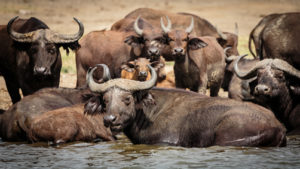
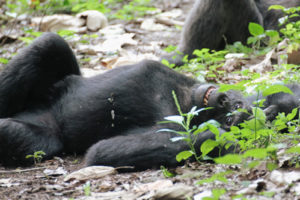
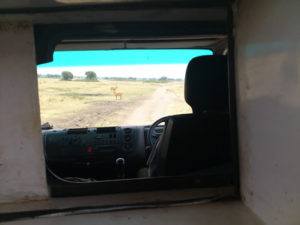
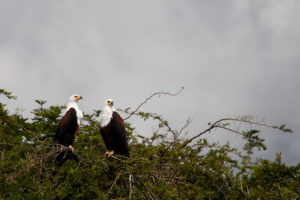 During certain seasons of the year, millions of migratory birds come to escape the harsh winters in Europe making the park a true birders heaven. Among the bird species to look out for are the Yellow-backed, Yellow wagtails, Yellow throated Cuckoo, Yellow backed Weavers, Wood sandpipers, Winding and Carruther’s Cisticolas, White-winged Warbler, White-winged Terns, White-tailed Lark, White-faced Whistling, White and Abdim’s Storks, Whalberg’s Eagle, Water Thick-knee, Verreaux’s Eagle Owl, Swamp Fly-catcher, Spur-winged and African Wattled Plovers, Spotted Redshank, Slender-tailed Mourning Dove, Slender-billed, shoebill stork, Sedge warbles, Saddle-billed Storks, Ringed Plover, Red-chested Sunbirds, Pin-tailed Whydah, pink-backed pelican, Papyrus Gonolek, Papyrus canary, Open-billed Stork, Northern Pochard, Martial Eagle, Malachite and Pied Kingfishers, Little Stint, Lesser Masked Weavers, Lesser and
 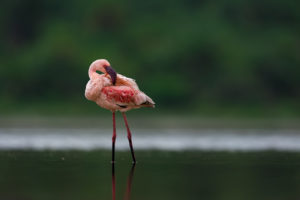 Greater Flamingo, Knob-billed Ducks, Jack Snipe, Grey-headed Kingfishers, Grey-headed Gull, Grey-capped Warbler, Grey Kestrel, Great-white and Pink-backed Pelicans, Greater Swamp and winged Warblers, Great white and Pink-backed Pelicans, Great and Long-tailed Cormorants, Gabon and Slender-tailed Nightjars, Eurasian Wigeon, Curlew Sandpipers, Corncrake, Common Teal, Common Squaco Heron, Common Snipe, common sand Martins, common Greenshank, Collard Pranticles, Chapin’s flycatcher, Brown Snake Eagle, brimstone Canary, bright coloured Saddle-billed Stork, Black-tailed Godwit, black-rumped buttonquail, Black-headed Gonoleks, Black Crake, Black Bee-eater, Bateleur, Bar-tailed Godwit, African White-tailed Lark, African skimmer, African Open-billed Stork, African Mourning Dove, African Jacana, African Harrier Hawk, African Fish Eagle, African Broadbill, and African beautiful Black-headed Gonolek.
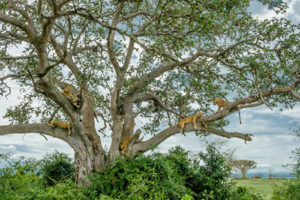 It happens that the lions here have adapted to life spent climbing the numerous fig trees after hunting in the morning or during the afternoon heat. Scientists have not come up with a clear explanation of why these lions climb up the trees but there are theories that they do so because of the insects and parasites (like Tsetse flies) on the ground. Game drives are organized to the Ishasha sector with the main purpose of spotting the lions up on the trees. Apart from the lions, the Ishasha sector also has mammals like warthogs, buffaloes and elephants. The Ishasha sector is located near the highway leading to Bwindi and hence a perfect stopover for those intending to see the lions and gorillas in Bwindi Impenetrable forest National Park.
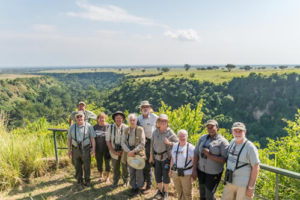 From the viewing platform above the gorge, tourists can spot many of the creatures down on the tree tops in the vast valley. Visiting the gorge is not all about primates but also an opportunity to see birds, snakes, butterflies and other water bodies. It is also an opportunity to learn about vegetation/species found nowhere else on earth. The two to four hours Chimpanzee tracking at the Kyambura gorge costs $50 and only eight permits are issued out each day. All the chimpanzees in the valley are habituated and bookings are done at the Information Centre in Mweya. The chances of seeing chimps are very high in the morning though not compared to Kibale National Park. If you are interested in combing game drives and chimpanzee tracking in Kyambura Gorge, you should check out this 4 Days Queen Elizabeth National Park package.
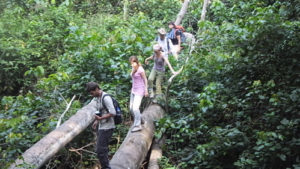 Talking about primates, Maramagambo forest has about 9 species of primates including chimpanzees, L’Hoest’s monkeys, Vervet monkeys, bush baby, red-tailed monkeys and baboons. One of the trails leads to a group of caves that are home to thousands of bats. These bats attract large rock pythons that love to feed on them. It is possible to spot both the bats and pythons from a safe viewing area. The chimpanzees found in Maramagamono are not yet fully habituated but can still be sighted during long walks to the forest interior. A guided walk to Maramagambo forest costs $30.
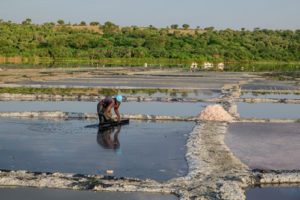 Visiting the Lake Katwe Salt Mines: Lake Katwe is one of the few salt lakes in East Africa. The lake has no wildlife because of the high salinity. Despite that, the area around the lake is a beehive of activity especially during the dry season as villages gather to remove salt from the milky waters. Salt mining has survived in Katwe for centuries and was once very lucrative until other sources and methods of mining where discovered. Most of the salt used in Ugandan homes originates from Lake Katwe. Salt is still mined traditionally using hands despite the dangers posed by the toxic saline waters. A visit to the mines allows tourists to learn about the salt mining industry while also interacting with the local mining community. Most of the salt is sold to manufactures while the rest is taken home by the miners.
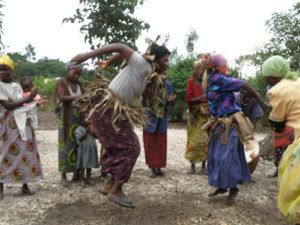 While with the Kikorongo Equator Cultural group, visitors can be taught how to make local art and craft – like weaving baskets using natural fibers. Many of these artifacts are available for sale at reasonable prices. After visiting the group, the leaders can take visitors to individual families to learn about how the locals, cook, manage their gardens, make household items and build grass thatched houses. The opportunities for cultural experiences are numerous with almost every lodge and hotel arranging their own tours for their residents. The Kikorongo cultural group is often called to perform at the lodges in the park. Other cultural encounters include the Katwe Village Walk, local school walks or visiting the Nyanz’ibiri Cave Community.
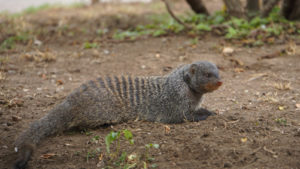 During this activity the big cats are followed using radio collars inserted around their neck. The tourists watch as researchers and park staffs treat the cats and monitor their movements. During the tracking, other cats like leopards and hyenas can also be spotted. Only a few people are allowed to track the lions on a given day and booking should be done in advance. Apart from the lions, there is also mongoose tracking in the Mweya peninsula which costs $30. Tourists who are lucky may also be given an opportunity to take part in periodic animal censuses at a fee of about $100.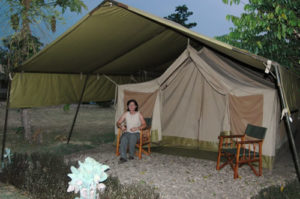
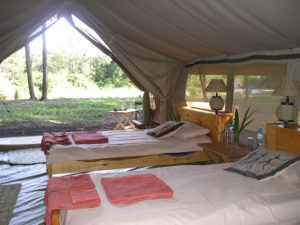
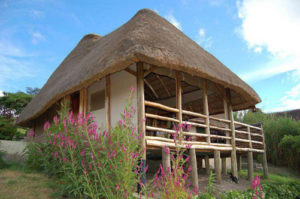
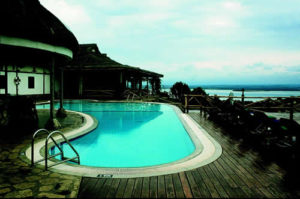 Mweya Safari Lodge: This luxury lodge is built in a strategic location with good views of the great Kazinga Channel. The lodge has both double and twin rooms that can accommodate up to 4 adults. The rooms are self-contained and of high quality with large beds with air conditioning. The lodge also has a bar, a restaurant and a high-end swimming pool. Mweya safari lodge organizes boat cruises to the Kazinga channel using its own fleets of boats for those who wish to have a more private boat cruise without the crowds in the public/government boat.
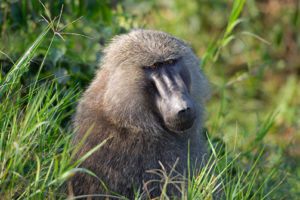 Queen Elizabeth Bush Lodge: The lodge is located in the middle of the park near the Mweya and Kasenyi areas of the park – just off the Mbarara to Kasese road. The lodge has ten self-contained rooms that are made of local material with eco-friendly toilets and showers. Queen Elizabeth Bush Lodge is managed by Nature group of Lodges and is suitable for those who have come for a game drive to the Kasenyi sector or tracking chimpanzees in Kyambura Gorge. Residents can sight many of the park animals like the inquisitive baboons from the comfort of their room verandahs.


