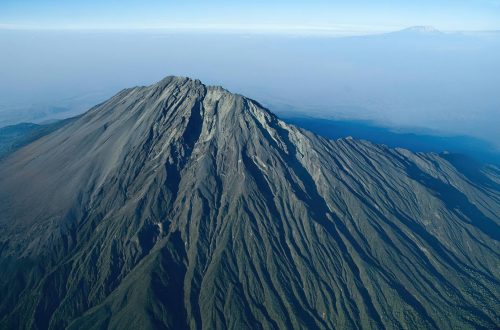
Mount Meru National Park—officially part of Arusha National Park—is one of Tanzania’s most picturesque and ecologically diverse protected areas. Centered around the towering Mount Meru, Africa’s fifth-highest peak at 4,566 meters, the park offers an enchanting blend of dramatic landscapes, lush forests, volcanic features, and abundant wildlife. Often regarded as a quieter alternative to Mount Kilimanjaro, Mount Meru provides equally breathtaking scenery with fewer crowds, making it a pristine destination for adventure seekers and nature enthusiasts.
The park’s landscapes are remarkably varied. At its heart rises Mount Meru,
An impressive dormant stratovolcano whose asymmetrical cone dominates the horizon. The mountain’s slopes are cloaked in dense montane forests teeming with wildlife, while its saddle and summit areas offer expansive alpine vegetation and sweeping views of Kilimanjaro on clear days. The lower regions of the park open into rolling savannahs, lakes, swamps, and lush glades that are rich in biodiversity.
Arusha National Park is renowned for its spectacular Ngurdoto Crater, a steep-walled volcanic caldera often referred to as the “Little Ngorongoro” for its dramatic shape and thriving wildlife. The Momela Lakes, a series of alkaline lakes in delicate pastel shades, form another of the park’s scenic highlights and attract large flocks of flamingos, as well as numerous other waterfowl and migratory birds.
Wildlife in the park is diverse and abundant. Visitors can encounter giraffes, buffaloes, zebras, warthogs, waterbucks, bushbucks, and black-and-white colobus monkeys, along with leopards and hyenas that roam the deeper forested areas. The park is also a haven for bird watchers, boasting over 400 species ranging from forest birds to large raptors and migratory species.
Mount Meru National Park is particularly famous for its walking safaris and guided treks, which allow travelers to explore the forests, waterfalls, and volcanic terrain on foot—a rare and exhilarating experience within Tanzania’s protected areas. The multi-day ascent of Mount Meru is considered one of the most scenic hikes in East Africa, combining wildlife, forest exploration, and alpine adventure in one.
With its stunning natural beauty, ecological richness, and serene wilderness feel, Mount Meru National Park stands as one of Tanzania’s most captivating yet often overlooked safari destinations. It offers a perfect blend of adventure and tranquility, making it an ideal beginning or complement to safaris in the greater northern circuit.
How to Access Mount Meru National Park
By Air:
The nearest airport is Arusha Airport (ARK) for domestic flights and Julius Nyerere International Airport (DAR) in Dar es Salaam or Kilimanjaro International Airport (JRO) for international arrivals.
From Kilimanjaro International Airport, the park is approximately 60 kilometers (1.5 hours drive) northwest. Private transfers or car rentals are available from the airport.
Arusha city, about 30 kilometers (45 minutes) from the park entrance, serves as the main hub for accessing Mount Meru. Most visitors combine their visit with safaris in Arusha National Park, Ngorongoro Conservation Area, or Serengeti National Park.
By Road:
The park is well connected by tarmac and gravel roads. From Arusha town, head northwest on the Arusha-Meru Road, passing small villages, coffee plantations, and scenic farmland before reaching the park gate at Momella Gate.
A 4×4 vehicle is recommended if you plan to explore remote forest trails or the higher slopes of Mount Meru, especially during the rainy seasons.
Safari operators in Arusha offer guided day trips, trekking tours to Mount Meru summit, and multi-day packages combining wildlife viewing with hiking.
By Tour Operators:
Many tour companies in Arusha provide organized treks, walking safaris, and wildlife viewing tours, including transport, park fees, and professional guides. This is often the easiest option for first-time visitors.
Best Seasons to Visit Mount Meru National Park
Mount Meru National Park is located in northern Tanzania, and the climate is influenced by both elevation and the bimodal rainfall pattern. The best time to visit depends on whether your focus is hiking Mount Meru or wildlife viewing:
1. Dry Seasons (Best for Hiking & Wildlife Viewing):
January to March (short dry season) and June to October (long dry season) are ideal for trekking and safaris.
Trails are less muddy, summit ascents are safer, and wildlife is easier to spot near water sources.
Temperatures are cooler at higher elevations, especially early mornings and evenings, making treks more comfortable.
March to May (long rains) and November to December (short rains) bring lush greenery, waterfalls, and blooming flora.
The rainy season can make the higher slopes slippery and challenging for summit treks.
Wildlife can be harder to spot, as animals disperse into dense forest and grasslands.
Despite the rains, it is a beautiful season for photography, birdwatching, and enjoying the forest environment.
Additional Considerations:
Sunrise and early morning hikes offer spectacular views of Mount Kilimanjaro from Mount Meru’s slopes on clear days.
Trekking permits and park fees are required for climbing Mount Meru, and hiring a local guide and porter is recommended for safety and support.
Temperatures vary with elevation: the base of the mountain is warmer, while the summit can be cold, with temperatures dropping to near freezing at night.
Described by Ernest Hemingway as the ‘loveliest I had seen in Africa’, Lake Manyara National Park is situated on the Western escarpment of the Rift Valley. Home to lesser flamingos, tree-climbing lions, and one of Africa’s highest concentrations of elephants, Lake Manyara National Park is one of Tanzania’s most popular safari destinations.
Located in the Arusha Region of northern Tanzania, Lake Manyara is the centrepiece of the Lake Manyara National Park. Lake Manyara is a soda lake and its 230km² surface covers two thirds of the park’s total area. Designated as a national park in 1960, Lake Manyara National Park is home to a diverse range of stunning landscapes, including marshland, dense acacia woodland, and steep rocky slopes.
Lake Manyara Park is famous for housing vast flocks of flamingos, tree-climbing lions, and one of the highest concentrations of elephants in all of Tanzania.
Where does Lake Manyara National Park fit into your Tanzanian adventure?
Lake Manyara National Park is part of the northern circuit of national parks in Tanzania. A popular route is to start in Arusha and visit Lake Manyara before continuing to Serengeti National Park, Ngorongoro Conservation Area, and finishing your adventure at Arusha. These attractions can be combined as part of a 5-6 day itinerary.
Although Lake Manyara does not contain as much wildlife as its bigger sisters, the Ngorongoro Crater and the Serengeti, scientists believed that Lake Manyara contained one of the highest concentrations of wildlife in Africa during the 1980s.
Your park entry fee (US$53.10 per adult, per day at time of writing) will support conservation work that aims to return the park to its former glory as one of Africa’s most biodiverse areas.
Wildlife at Lake Manyara National Park
Lake Manyara is home to a diverse ecosystem which contains a range of habitats, including a soda lake, acacia woodland, equatorial forest, several types of savannah, and even mountain slopes.
Lesser flamingos and pelicans thrive at Lake Manyara, but its alkaline waters are undrinkable for most other animals. However, many animals are forced to drink Lake Manyara’s alkaline waters to survive the dry season since most other water sources dry up completely.
Lake Manyara is famous for its tree-climbing lions. The park’s lions tend to climb trees far more often than lions in the Serengeti National Park or Tarangire National Park. This phenomenon has baffled scientists and seeing tree climbing lions on a game drive is an unforgettable experience.
Hot springs can be found in the south of the park, and the park is bisected by 2 rivers, the Mto wa Mbu River and the Endabash River.
Lake Manyara is home to 400 bird species, and it is a paradise for bird enthusiasts. The park also contains water buffaloes, zebras, antelopes, wildebeests, and the world’s largest concentration of baboons.
The park’s elephant population has suffered from poaching, but conservation efforts have protected a strong population of these gentle giants.
When to visit Lake Manyara National Park ?
Like all of Tanzania’s national parks, Lake Manyara’s peak season is during the dry monthsfrom July to September.
The short dry season from mid-December to early March is also a good time to visit, but the temperatures can get very hot during this period.
Although you will see wildlife during the wet season, it will be more difficult to spot animals amongst the luscious vegetation. In the dry season, animals are drawn to the few remaining water sources and wildlife viewing opportunities are excellent.
Bird enthusiasts may choose to visit during the short rainy season from the end of October to December. Migratory birds visit the park during these months, but muddy roads may be impassable, and some lodges close during the low season.
Ngorongoro Crater, Tanzania Conservation Area
The Ngorongoro Crater, Tanzania – with its lush green plains, woodland trees and wildflowers – is one of the most popular travel destinations in Tanzania. A stunningly beautiful place, it’s often referred to as the ‘Garden of Eden’. Ngorongoro has been the site of numerous archaeological discoveries over the years, and it’s now one of the best places for safari in East Africa.
Ngorongoro Crater Tanzania, at a glance
The Ngorongoro National Park is located west of Arusha, connecting to the Serengeti in the north-west and to the Great Rift Valley in the east.
The Ngorongoro Crater Tanzania was established as a conservation area for wildlife and the semi-nomadic Maasai population that reside in it.
The caldera is an important landmark for human history, as well as an essential habitat safeguarding animal diversity. Despite its small area, the caldera has excellent bio-diversity, and several globally threatened species live on these plains. These plains form part of the route of the Great Migration.
The caldera is of scientific importance as important discoveries were made here that shed light on the path of human evolution.
Aside from the main caldera, there are two other volcanic craters: the Olmoti and Empakai. The Olmoti is famed for its beautiful waterfalls, and the Empakai is known for its deep lake and lush green walls.
Another amazing site is the Olduvai Gorge, a 14km long ravine. In order to protect this incredible natural wonder, visitor numbers are closely monitored, and you must obtain a permit to enter the crater and the gorge.
The crater was formed around 2.5 million years ago when a volcano – thought to be roughly the same height as Kilimanjaro – erupted and collapsed in on itself. Now dormant, the volcano’s crater is 610 metres deep and 20km wide, making it the world’s largest inactive caldera.
Serengeti National Park is a Tanzania Safari destination where you experience millions of Wildebeests Migrating from Serengeti National park Tanzania to Maasai Mara reserve in Kenya via Maasai Mara River. Serengeti National Park with 14,763 sq km is the largest Tanzanian park, contiguous with Kenyan Masai Mara and extending almost to Lake Victoria.
A tour in Tanzania without setting your eyes on the beautiful Serengeti national park is not a safari worthwhile. The word Serengeti simply means endless plains in the Maasai language. The diversity and beauty of the park will leave you yearning to visit the park as soon as you can. The park is located north of Tanzania and stretches into the south of Kenya with an area of about 1.5 hectares of Savannah grassland.
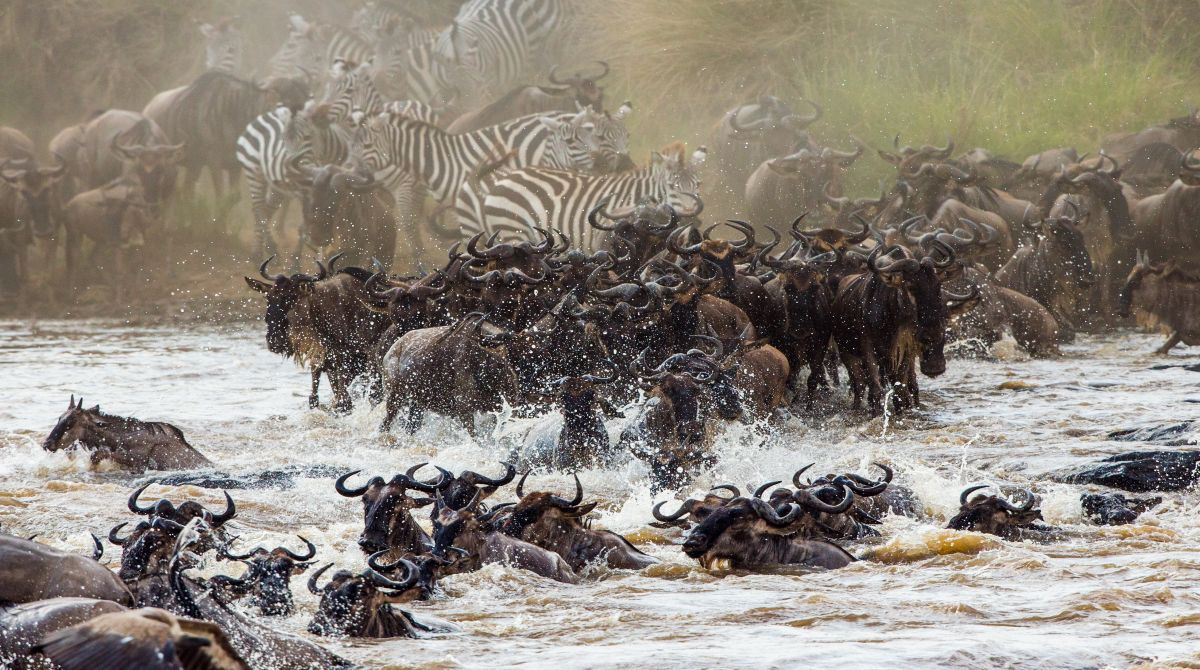
One of the most spectacular events that take place in the Serengeti, is that there is an annual migration of vast herds herbivorous animals such as the zebras, wildebeests and gazelles followed by their predators across Grumeti river. In Addition, the park’s diversity includes several endangered animals such as the black Rhinoceros and many others.
History of Serengeti national park
The Maasai originally lived and grazed their cattle on the Serengeti lands. Serengeti gets its name from the Maasai word “siringet,” which means the place where the land runs on forever. The first American to visit the Serengeti was Stewart Edward White who toured northern Serengeti in 1913 and returned in 1920 with his companions whose aims were to hunt lions.
The British administration realized the drastic reduction in the number of lions in the area and they demarcated the land as a conservation unit. In addition, the Maasai were evicted to Ngorongoro conservation unit in 1959 where they currently live. The park is known as the oldest national park in Tanzania and the flag bearer in the tourism industry of Tanzania.
Species to adventure in Serengeti National Park on your Tanzania Safaris Tour
The park is teaming with stunning wildlife – it is thought that over 3 million large mammals roam the plains in search of fresh grassland. In May or early June you can witness the annual migration of millions of zebras and wildebeests in search of water and forage as the seasons change.
Large herds of antelopes of all sorts include: Patterson’s eland, Klipspringer, Dik-dik, impala, gazelles, water-buck, bush-buck and reed-buck, topis, kongoni, cotton’s oribi, grey bush dicker, roan antelope buffalo and wildebeests (the estimate is above one million of these animals). Carnivores include lions, leopards, cheetah, hyena, bat eared fox, hunting dog and jackal. Smaller mammals: spring hare, porcupine, warthog, Hyraxes, baboon, vervet monkey, Colobus monkey, patas monkey, and mongooses. Larger mammals include herds of giraffes, then rhinos, elephants, hippos. There are recorded about 500 species of bird, including vultures, storks, flamingos, martial and fish eagles and ostriches. Reptiles include crocodiles, a number of species of snakes and lizards.
Wildlife living in Serengeti national park
The Serengeti national park is famous for its variety in animals as well as birds, that is why it is considered the the best national park in Tanzania.
Animals in the park can be easily spotted and these include large buffalo and Elephant herds, Antelopes, Warthogs, Zebras, magnificent Wildebeests, Giraffes, Hyenas, Lions, Cheetahs, Hippos, Leopards and the black Rhinoceros if you are in luck.
The park is also colored with over 500 bird species. These birds include, rufous tailed weaver, Kori bustard, grey breasted spurfowl, Fischer’s lovebird and so many other beautiful kinds.
Activities to do in Serengeti National Park on your Tanzania Safaris Tour:
Serengeti National Park offers amongest the most exciting game viewing safaris in Tanzania. You can also do bird watching tours and Balloon safaris, which normally follow the Grumeti river. One of the main attractions is the annual migration of wildebeest herds during the dry season, from the Serengeti northwards in the Masai Mara, where they remain between July to October. Therefore the concentration of wildlife is greater between December and June.
Game drives
The park gives it’s guests the opportunity to go on game drives twice a day, at the break of dawn and in the evening. On this ride, you will be able to spot Elephants, Buffaloes, Wildebeests, Warthogs, Zebras, Antelopes, Lions, Hyenas, Leopards , Cheetahs and many more animals as well as beautiful birds.
This migration takes place once every year and several people from all over the world come with the hope of experiencing this beautiful site. This activity is mind-blowing and mouth gaping because the sight of such large animals causing great waves and splashes in the Water as they move in search for greener pastures is worth the visit.
Masai Mara people
The Maasai Mara people are the indigenous group living within the Serengeti national park. These people have lived in this park for over 200 years and carry out several exciting rituals and customs. Visiting this group of people will be an interesting adventure for history and cultural lovers.
Olduvai Gorge
This is another fascinating attraction within the borders of the Serengeti national park. This is the site where archaeologist Dr. Louis Leaky dug up the remains of the first early man from about a million years ago. This site represents the history of man and a fascinating place to visit while at the Serengeti.
Moru Kopjes
This is a rocky area with a variety of shades where the black rhino can easily be spotted and a habitat for several predators. This is therefore an exciting place to visit.
Retina Hippo pool
This is a water body famously known for large pods of hippos as you can tell from its name. At this site, you will be able to see a variety of hippos,fighting and swimming in the water
Grumeti River
This is a water body infested by crocodiles within the water and along the shores. It is amusing to watch several animals such as the wildebeests and zebras putting their lives at risk by crossing the waters with predators in the water waiting to devour them. Sometimes the river can also be a calm and scenic sight.
Seronera river valley
This area is an extremely beautiful site with rivers flowing, grasslands, gorges and plains as well as animals grazing within the park. The valley is a summary of the unique fauna and flora within the park
Hot air balloon safari over the Serengeti
This gives you an opportunity to see the beautiful landscape from a bird’s eye view. The hot air balloon will give you the view of the entire Serengeti at the break of dawn with all its exciting reliefs and animals.
Accommodation in the park
While at the magnificent and beautiful Serengeti national Park, your comfort ,relaxation and enjoyment will be taken care of at the following lodges; Serengeti Sopa lodge, Soroi Serengeti camp, Serians Serengeti camp, Seronera wildlife lodge, Serengeti Mawe tented camp, Serengeti heritage tented camp, Serengeti Halisi camp, Singita Mara river camp, Robanda tented camp, Mapito tented camp, Lobo wildlife lodge and Lake Masek tented camp.
How to get there
The most convenient means of travel to the Serengeti is a flight to Kilimanjaro airport that is 29 miles from Arusha and then take a small chartered plane to Serengeti or an 8 hours road trip to Serengeti national park.
In conclusion, you cannot tour Africa without visiting Serengeti national park because it harbors almost all the animals that you will find in other African parks.
Serengeti national park
The scotching sun drains most of the moisture from the terrain, baking the soil to a dusty red, and the grass withers as weak as straw. River Tarangire has dried-up to just shadow of itself in the wet season. however its waters are consumed by the thirsty wildlife. Thirsty wild animals move across several kilometers granted that at least they will find some water here in Tarangire National Park.
There are large elephant herds of as many as 300 individuals that scratch the to 300 elephants scratch the dried out river bed to access water from underground streams, while the decrease levels of water in the lagoons are consumed by the large crowds of migratory wildebeests, zebras, buffalos, impalas, gazelles, hartebeests as well as elands. At this time this park hosts the largesse number of wild animals outside the vast Tarangire National Park Ecosystem. This place which then hosts a profusion of predators is the one place where you can see the dry condition adapted antelopes like the stately fringe-eared oryx as well as the odd long-necked gerenuk in Tanzania.
Tarangire Park, in the rainy months, the seasonal migrants disperse over the 20,000 square kilometers (12500 square miles) range till they wear out the green plains before returning to the river yet again. However the great number of elephants can easily be seen not only in the dry but the season as well.
The swamps which are green throughout the year are the home to about 550 bird species, making it the most breeding habitat on planet.
Out of the wet ground you will see the Kori bustard which is the heaviest flying species of bird, ground hornbills plus ostriches which are the largest birds in the world.
More enthusiastic bird-lovers if lucky may be able to see flocks of the colorful yellow collared lovebird, as well as the fairly rufous tailed weaver plus the ashy starling; all these species are endemic to the arid savannah in central and northern Tanzania.
Abandoned termite mounds are usually visited by colonies of the charming dwarf mongoose, plus pairs of red and yellow barbet, that draw attention by their characteristic loud duetting.
Pythons living within Tarangire National Park are known for their tree climbing character just as the lions plus the leopards, commonly seen resting in the branches of sausage trees.
Size and location of Tarangire National Park
Tarangire National Park covers a total land expanse of 2850 square kilometers or 1,096 square miles. The park is located 118 kilometers or 75 miles southwest of the town of Arusha.
How to reach Tarangire National Park a quick drive from the town of Arusha or from Lake Manyara through a surfaced road to over 7km / 4 miles to the park main entrance; from here you can continue to Serengeti as well as Ngorongoro Crater.
there are also Charter flights connecting from Serengeti and Arusha.
Activities to enjoy in Tarangire National Park
Visitors have a number of activities to enjoy within this park among which are: Guided walking safaris, see the numerous very old rock painting found around Kolo along the Dodoma road as well as take day trips to the villages of the Maasai and the Barabaig.
The best time to visit Tarangire National Park
This park can be visited any time of the Year however the dry season from June to September is perfect as there are large numbers of wild animals in the park.